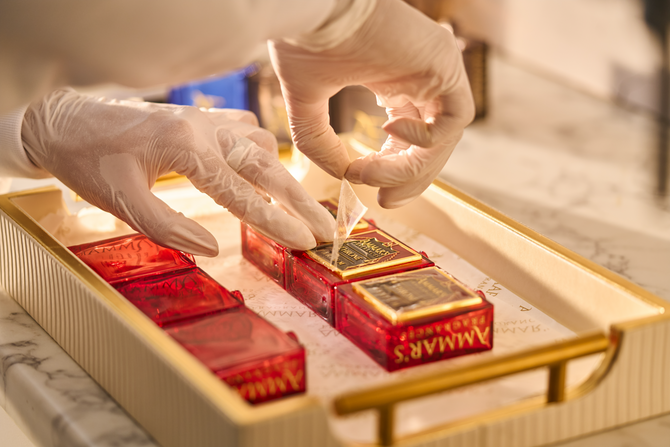



Khaleeji parfum is a concentrated, oil-based fragrance tradition that comes from the Gulf region (Khaleej) of the Arabian Peninsula. It is built around rich, natural ingredients like oud, musk, amber, and saffron, and it is designed to last far longer than most Western alcohol-based perfumes. A single dab can stay on your skin for 8 to 14 hours, sometimes even longer on clothing.
If you have ever walked past someone and been stopped in your tracks by a deep, warm, woody scent that seemed to cling beautifully to the air long after they passed, there is a good chance you were experiencing a Khaleeji fragrance. This guide explains exactly what Khaleeji parfum is, how it is made, how it differs from regular perfume, how to wear it correctly, and how to find the right one for your lifestyle and budget.
Khaleeji Parfum and Perfume Oils Key Takeaways
- Khaleeji parfum is a concentrated, alcohol-free perfume oil rooted in Gulf Arab culture, built around ingredients like oud, musk, amber, and saffron.
- Because oil evaporates far more slowly than alcohol, a quality Khaleeji perfume oil often lasts 8 to 14 hours on skin compared to 4 to 6 hours for most spray perfumes.
- The GCC fragrance market was valued at $3.0 billion in 2024 and is growing at 5.09% annually (IMARC Group, 2024).
- Dab, never rub. Rubbing breaks down the top notes and shortens longevity.
- For first-time buyers, start with a white musk, rose-musk, or soft oud blend before trying pure oud attars.
What Does "Khaleeji" Actually Mean?
The word Khaleeji (خليجي) comes from the Arabic word Khaleej, meaning "Gulf." It refers to the culture, people, and traditions of the Gulf Cooperation Council (GCC) countries, which include Saudi Arabia, the UAE, Kuwait, Qatar, Oman, and Bahrain.
When people say Khaleeji parfum, Khaleeji perfume, or Khaleeji fragrance oil, they are referring to fragrances that reflect the scent identity of this region. These are bold, intense, layered, and deeply personal fragrances. They are not just something you spray on before leaving the house. In Khaleeji culture, fragrance is a ritual. It tells people who you are before you say a single word.
The GCC perfume market was valued at $3.0 billion in 2024 and is projected to reach $4.8 billion by 2033, growing at a CAGR of 5.09%, according to IMARC Group's latest research.
That number alone shows how deeply fragrance is woven into daily Gulf life.
What Is Khaleeji Parfum? A Simple Breakdown
|
Feature |
Khaleeji Parfum |
Western Eau de Parfum |
|
Base |
Oil (no alcohol) |
Alcohol-based |
|
Concentration |
25% to 40%+ fragrance oil |
15% to 20% fragrance oil |
|
Longevity |
8 to 14+ hours on skin |
4 to 8 hours typically |
|
Application |
Dabbed directly on skin |
Sprayed on skin or clothes |
|
Key Ingredients |
Oud, musk, amber, saffron, rose |
Citrus, florals, musks, synthetics |
|
Scent Profile |
Warm, woody, resinous, intense |
Fresh, light, structured top-to-base |
|
Alcohol-free |
Yes, always |
No, alcohol is the carrier |
|
Cultural Role |
Spiritual, social, and identity |
Primarily grooming and style |
Khaleeji perfume oils are also sometimes called attar or ittar, which is the traditional term for concentrated, alcohol-free perfume oils made by distilling natural botanicals into a base of sandalwood oil or other carrier oils. Not all Khaleeji fragrances are attars in the classical sense, but the oil-based, alcohol-free DNA is always there.
The History Behind Khaleeji Fragrance Culture
Arabian perfumery has ancient roots, with historical records of fragrant resins, oud, and incense trade dating back thousands of years across the Arabian Peninsula and wider Middle East.
The Al Qurashi family's roots in Arabian perfumery go back to 1852, when they began processing oud and amber in Saudi Arabia. By 1932, Abdul Samad Al Qurashi had established the formal perfumery that now bears his name, building a legacy that grew to over 400 stores across 48 countries. The Gulf region was building its own fragrance heritage quietly, crafting deep, resinous oils that Western perfumery did not understand or even know about for decades.
By the late 1990s, Western luxury brands started noticing how much Gulf consumers loved fragrance. They began releasing oud-forward collections to reach those markets. What happened next surprised everyone. Those Gulf-inspired notes, especially oud, became globally popular. The West had essentially introduced Khaleeji-inspired fragrance to the rest of the world, and a new era of Arabian perfumery began.
Today, brands like Tom Ford, Dior, and Guerlain release oud-based lines that draw heavily from Khaleeji tradition. But if you want the real thing, authentic concentrated perfume oils made the Khaleeji way are still something very different from what any Western bottle can offer.
Key Ingredients in Khaleeji Perfume Oils
Understanding the ingredients is the fastest way to understand why these fragrances smell the way they do. Every note has a reason and a history.
Oud (Agarwood)
Oud is the heart of most Khaleeji fragrances. It comes from the resinous heartwood of the Aquilaria tree, which only forms its prized scent when the tree becomes infected with a specific mould. According to CITES documentation on agarwood, only a small fraction of Aquilaria trees naturally produce the resin that makes oud viable, which is why pure oud oil is among the most expensive raw materials in the world. The smell is smoky, woody, slightly leathery, and deeply complex. It changes on the skin throughout the day.
Musk
Traditional Arabic musk, especially white musk and natural musk, gives Khaleeji blends their skin-close warmth and depth. Musk acts as a fixative, helping all other notes last longer and blend more smoothly.
Amber
Gulf amber is not a single ingredient. It is usually a blend of labdanum, benzoin, and vanilla that creates a warm, honeyed, slightly sweet resinous note. It adds richness and longevity to any blend.
Saffron
Saffron brings a leathery, slightly metallic, and luxurious quality to Gulf fragrances. It is one of the most expensive spices in the world and adds a depth that nothing else can replicate.
Rose (Taif Rose)
The Taif rose from Saudi Arabia is considered one of the finest rose materials in global perfumery. It is richer, more intense, and more honeyed than standard rose oil. Many Khaleeji fragrances include it as a heart note.
Sandalwood
Sandalwood is one of the oldest carrier oils used in traditional attar perfumery. It is creamy, smooth, and woody, and it forms the perfect backdrop for bolder ingredients like oud and saffron.
Frankincense (Luban)
Frankincense is burned as bakhoor incense across the Gulf and also appears as a note in many perfume oils. It is resinous, slightly citrusy, and carries a clean, almost meditative quality.

Khaleeji Parfum vs Bakhoor vs Attar: What Is the Difference?
Many people confuse these three terms. Here is a clear breakdown:
|
Type |
What It Is |
How It Is Used |
|
Khaleeji Parfum / Perfume Oil |
Concentrated oil applied to the skin |
Dabbed on pulse points |
|
Attar (Ittar) |
Traditional oil distilled from botanicals into a sandalwood base |
Same as perfume oil, worn on the skin |
|
Bakhoor |
Wood chips soaked in fragrant oils, burned as incense |
Burned on a charcoal or electric burner |
|
Mukhallat |
A blended oil combining multiple notes (oud, rose, musk, etc.) |
Dabbed on skin |
Bakhoor is not worn on the body. It is burned in the home or over clothing to add fragrance. In many Khaleeji households, people will pass their clothing through the rising smoke from a bakhoor burner before getting dressed. The fabric absorbs the scent, and it can last for hours.
Khaleeji parfum and attar are worn directly on the skin, but the difference is subtle. Attar usually refers to the traditional distillation method. Khaleeji parfum is a broader term that includes modern oil-based formulations as well as classics.

Quick Glossary: Arabian Fragrance Terms Explained
|
Term |
Simple Definition |
|
Oud |
Resinous wood from the Aquilaria tree, the core ingredient in Gulf perfumery |
|
Attar / Ittar |
Traditional alcohol-free perfume oil distilled into a sandalwood base |
|
Mukhallat |
A blended perfume oil mixing multiple notes such as oud, rose, and musk |
|
Bakhoor |
Fragrant wood chips burned as incense, not worn on skin |
|
Luban |
Arabic word for frankincense; a resinous, clean-burning incense note |
|
Sillage |
The scent trail is a fragrance that leaves in the air as you move |
|
Khaleeji |
Meaning "Gulf" in Arabic, refers to the culture and traditions of GCC countries |
|
IFRA |
International Fragrance Association sets global safety limits for fragrance ingredients |
Quick Facts: Khaleeji Perfume at a Glance
|
Feature |
Detail |
|
Origin |
Gulf Region (Saudi Arabia, UAE, Kuwait, Qatar, Oman, Bahrain) |
|
Core Ingredient |
Oud (Agarwood) |
|
Fragrance Concentration |
25% to 40%+ |
|
Alcohol Content |
None. This is a fully alcohol-free perfume oil. |
|
Longevity on Skin |
8 to 14 hours |
|
Longevity of Clothing |
It can last a full day on fabric, sometimes longer. |
|
Application Method |
Dab, do not rub |
|
Price Range (quality oils) |
£20 to £150+ for reputable UK brands; pure collector oud attars can cost significantly more |
|
Best For |
Evenings, weddings, special occasions, colder weather |
|
GCC Market Size (2024) |
Estimated $3.0 billion |
Why Khaleeji Perfume Oils Last So Much Longer
Alcohol evaporates fast. That is why most Western sprays fade after a few hours. The alcohol launches the scent into the air strongly at first, but it also carries it away with it as it evaporates. An alcohol-based perfume is like a firework. Bright at first, then gone.
Arabian perfume oil and attar work very differently from anything in an alcohol-based spray. Because oil molecules are heavier and evaporate slowly, they hold the scent close to the skin and release it gradually throughout the day. The warmth of your body activates the oil continuously. Body heat literally becomes the mechanism that releases the fragrance over many hours. Oil also bonds with your skin's natural oils, which means the scent evolves slightly differently on each person.
The difference in longevity comes down to chemistry, not marketing. Oil molecules are heavier and evaporate much more slowly than alcohol. While a typical spray perfume fades within 4 to 6 hours as the alcohol burns off, a well-made attar or Khaleeji perfume oil continues releasing fragrance for 8 to 14 hours because body heat gradually activates the oil throughout the day.
This is also why Khaleeji fragrance culture values layering so highly. When you build up layers of complementary oils, the scent becomes more complex over time, not just longer lasting.
How to Apply Attar and Khaleeji Perfume Oil the Right Way
Most people who are new to Arabian perfume oils make the same mistakes. Here is everything you need to know to get the most out of your fragrance.
Step 1: Start with Clean, Moisturised Skin
Apply your Khaleeji parfum right after a shower while your skin is still slightly warm and clean. Dry skin does not hold fragrance as well as moisturised skin. Apply an unscented moisturiser or a small amount of jojoba oil to your pulse points first. This creates a base layer that traps the fragrance molecules and extends longevity significantly.
Step 2: Identify Your Pulse Points
Pulse points are the areas of your body where blood vessels sit closest to the surface of your skin. The warmth from these spots gently activates and releases the fragrance throughout the day. Key pulse points to use include:
The inner wrists, behind the ears, the base of the throat, the inner elbows, behind the knees, and the chest. You do not need to use all of them at once. Start with two or three and see how the fragrance performs for you.
Step 3: Dab, Never Rub
This is the most important rule when applying perfume oil. When you rub your wrists together after applying, you break down the delicate aromatic molecules that create the scent's top notes. It distorts the fragrance and causes it to fade faster. Always dab the oil gently and let it settle on its own. A little goes a very long way.
While some suggest that rubbing "crushes" the molecules, the real issue is friction. Rubbing your skin together creates a sudden burst of heat that forces the delicate top notes, like Taif rose or citrus, to evaporate prematurely. By dabbing, you allow the oil to bond with your skin and release its layers at its own natural, intended pace.
Step 4: Less Is More
Khaleeji perfume oils are highly concentrated. A single drop on one or two pulse points is often enough. Because they stay close to the skin rather than projecting widely in the air, you will smell beautiful to anyone who gets close, but you will not overwhelm a room. This intimate quality is actually part of the tradition. Gulf fragrance culture values the idea that your scent should be a close, personal experience, not an announcement from across the room.
Step 5: Layer for Depth and Longevity
If you want to take your fragrance game further, try layering. Start with a heavier base note like an oud or amber oil, wait a few minutes for it to settle, then apply a lighter note on top like rose or musk. This builds complexity into the scent that unfolds over the hours. A widely shared principle in Arabian perfumery is to combine oils from the same scent family for the most harmonious result, layering like with like before mixing contrasting notes.

What Not to Do with Khaleeji Perfume Oil
Getting these things wrong is the most common reason people are disappointed by their first experience with Arabian perfume oils.
Do not rub the oil in vigorously. It damages the scent structure.
Does perfume oil stain clothes? It can, yes. Concentrated oils can leave marks on silk, light-coloured fabrics, and synthetic materials. If you want the scent on clothing, dab a tiny amount only on the inside of collars or inner seams, and never apply it directly to the outer fabric.
Do not apply over a strongly scented lotion. The competing fragrances will clash and muddy the result. Use unscented moisturiser only.
Do not store your perfume oil in the bathroom or near a window. Heat, moisture, and direct sunlight degrade the oil over time. Keep bottles tightly closed in a cool, dark place.
Do not over-apply because you cannot smell it after a few minutes. This is called nose blindness. Your own sense of smell adjusts to a scent you wear, but others can still smell it clearly. Over-application becomes overwhelming to everyone around you. This phenomenon is technically known as olfactory fatigue or functional anosmia. It is your brain’s way of filtering out a constant stimulus so it can stay alert to new scents. Just because you can no longer detect the deep musk or woody oud on yourself doesn't mean it isn't projecting beautifully to those around you.
Pros and Cons of Khaleeji Perfume Oils
Pros
Long-lasting fragrance that can go from morning through evening on a single application. Alcohol-free formula is gentle on sensitive skin and does not dry out the skin the way alcohol-based sprays can. Highly concentrated formula means a small bottle lasts for months with daily use. The fragrance evolves uniquely on each person because it blends with your natural skin chemistry. Unisex by tradition, so most Khaleeji scents work beautifully regardless of gender. Deeply connected to a centuries-old cultural tradition that gives the fragrance more meaning.
Cons
Strong projection is not always ideal for office environments or enclosed spaces. The learning curve for the application takes some getting used to, especially for those raised on spray perfumes. High-quality oud-based oils can be expensive, particularly pure oud attars. Some people find the intensity of Khaleeji fragrance overwhelming at first, though this often changes with familiarity. Oil application is more deliberate than a quick spray, which some people find inconvenient.
Which Khaleeji Perfume Oil Should You Start With?
If you have never worn a Gulf fragrance oil before, this is the most practical question, and most guides skip it entirely.
Pure oud attars are not the right starting point for most newcomers. They are intensely animalic, smoky, and deep. If you go straight to raw oud oil on your first try, there is a fair chance it will overwhelm you before you have had a chance to appreciate it.
Here is a simple path based on what kind of scent you already enjoy:
|
Your Current Scent Preference |
Start With This |
|
Light florals, clean, fresh |
White musk attar or rose-musk blend |
|
Warm, sweet, gourmand |
Amber oil or soft mukhallat with vanilla notes |
|
Woods, cologne-style, unisex |
Light oud accord blend or sandalwood-oud |
|
Incense, deep, meditative |
Frankincense-oud blend or bakhoor-inspired oil |
|
Skin scents, intimate, subtle |
Pure white musk or musk-amber blend |
|
Ready for a full Gulf experience |
Pure oud attar, Taif rose, or heavy mukhallat |
The general rule: the closer you start to your comfort zone, the more likely you are to fall in love with Arabian perfume oils before moving deeper into the tradition.
A note on skin sensitivity: If you have sensitive or reactive skin, always do a patch test before applying any concentrated perfume oil to your pulse points. Apply a small amount to the inner elbow and wait 24 hours before full use. This applies to all concentrated fragrances, not just Khaleeji oils.
Popular Khaleeji Fragrance Notes by Season
Not all Khaleeji scents are the same weight or intensity. Choosing based on the season and occasion makes a big difference in how the fragrance performs and how it is perceived.
|
Season |
Best Khaleeji Notes |
Why It Works |
|
Autumn / Winter |
Oud, amber, musk, frankincense, sandalwood |
Warm notes bloom in cool air |
|
Spring |
Rose, saffron, light oud blends, white musk |
Fresh complexity without heaviness |
|
Summer |
Light musk, citrus attar, white oud, jasmine |
Stays pleasant in heat without overpowering |
|
Evening wear |
Heavy oud, dark amber, leather, bakhoor-inspired blends |
Bold enough for social settings |
|
Daily wear |
Light mukhallat, musk, rose-oud |
Subtle, wearable, all-day comfort |
Khaleeji Fragrance vs Western Oud Perfumes: An Honest Comparison
Since Western luxury houses began releasing oud-inspired collections, many people compare them to authentic Gulf perfume oils and Middle Eastern perfume oils to see whether they measure up.
Here is an honest look at how they differ.
Western oud fragrances like those from Tom Ford, Dior, or Maison Margiela are created with a Western audience in mind. The oud note is usually softened, blended with fresh or floral elements, and diluted with alcohol. They are lighter, more approachable for someone unfamiliar with Arabian perfumery, and often have a more polished, linear scent profile.
Authentic Khaleeji parfum is a completely different experience. The oud is front and centre, raw and deep. The sillage is rich and can feel almost physical. The scent changes and deepens as your body's warmth works with the oil over the hours. There is no pretence of lightness. One blogger who has lived in Dubai described Khaleeji fragrances as powerfully immersive, noting that Western oud versions often feel so diluted that the oud is barely present.
For a newcomer to Khaleeji fragrance, starting with a lighter Arabian oil blend before moving to pure oud attars is a sensible approach.
How to Spot Fake or Low-Quality Khaleeji Perfume Oil
Due to the value and popularity of authentic oud and Arabian oils, counterfeit and diluted products are very common.
Real oud oil has a complex, evolving scent that changes from woody and smoky at first to something softer and more honeyed over time. Fake oud often smells sharp, synthetic, and flat without that evolving quality.
Authentic Khaleeji perfume oils are typically sold in small bottles with a dabber or roll-on applicator. The oil itself should be slightly thick in texture, not watery. A watery consistency often means heavy dilution with cheap carrier oil.
Price is a signal but not a guarantee. Pure Bangladeshi or Indian oud oil at the collector level can cost thousands per gram. A $10 bottle claiming to contain pure oud is not what it says it is. When buying online in the UK, look for sellers who name their products specifically, list sizes clearly, and have a verifiable review base. Transparency about ingredients is the clearest sign of a reputable seller.
Always buy from sellers who are transparent about their ingredients and who have verifiable reviews.
How to Build a Khaleeji Fragrance Collection
You do not need ten bottles to start. A focused Khaleeji collection can begin with just three pieces.
A daily wear musk or light oud blend for work and casual settings. Something wearable and not overpowering, like a white musk attar or a light rose-oud mukhallat.
A medium-weight oud perfume oil or amber blend for evenings, social events, and colder days. Something with more projection and depth that can carry you from dinner through a late night.
A bakhoor or concentrated oud oil for special occasions. Weddings, Eid, family gatherings, and the moments when you want to make a real impression.
Finding authentic Gulf-standard oils in the UK used to require a trip to specialised boutiques in London. However, as the appreciation for traditional Arabian perfumery grows, it is now much easier to source collector-grade oud and mukhallats from dedicated UK fragrance houses that prioritise the same quality and concentration you would find in the traditional souks of Dubai or Riyadh.
If you’re looking for a UK starting point, Ammar’s Fragrances is one option people use for Gulf-style perfume oils, with prices from around £20 and bottle sizes ranging from 8ml to 50ml. Trying a smaller size first is usually the easiest way to learn what works on your skin before you commit to a bigger bottle.
A Note on Cultural Respect and Authenticity
Khaleeji fragrance is not just a product category. It is a living cultural practice that has shaped how millions of people across the Arabian Peninsula express identity, hospitality, and spirituality for thousands of years. When wearing these fragrances, especially when you are not from the Gulf region yourself, wearing them with an awareness of that heritage adds a richness to the experience.
When brands and sellers in countries like the UK take Khaleeji fragrance seriously, sourcing ethically, representing the notes honestly, and bringing genuine Gulf-inspired blends to new audiences, they contribute something positive to how this tradition travels and grows globally. The good news is that several UK-based fragrance houses now take this tradition seriously, sourcing responsibly and representing the notes honestly rather than chasing a trend.
Final Thoughts: Is Khaleeji Parfum Right for You?
If you want a fragrance that genuinely lasts all day, that develops and changes on your skin, that connects you to one of the oldest and most sophisticated scent traditions on earth, and that makes people stop and ask what you are wearing, then yes. Khaleeji parfum and perfume oils are absolutely worth exploring.
Start small. Try a sample or a small bottle of a reputable Khaleeji blend. Apply it correctly on moisturised skin, dab, not rub, and give it thirty minutes to fully open up before you judge it. The fragrance will likely be unlike anything you have experienced from a spray bottle.
That first moment when Khaleeji oil comes alive on your skin is something most people remember. It is not just a scent. It is an experience that carries centuries of culture in every drop.
For more on Khaleeji parfum, perfume oil guides, and how to find the right scent for your skin, explore reputable UK fragrance houses that stock dedicated Gulf-inspired collections, oil sizes from 8ml upward, and honest ingredient lists.
FAQs
Is Khaleeji perfume oil suitable for daily wear?
Yes, lighter Khaleeji blends featuring white musk, rose, or gentle oud accords are completely suitable for daily use. The key is choosing the right concentration and applying a smaller amount during the day.
Are Khaleeji perfume oils unisex?
Most are. Gulf fragrance culture does not separate scents sharply by gender the way Western perfumery traditionally does. Oud, musk, and rose blends are worn by everyone.
Can I layer Khaleeji oil with a Western spray perfume?
Yes, and this is actually a very popular technique in the UAE and across the Gulf. Apply your Khaleeji perfume oil to pulse points first, let it settle, then spray a lighter Western fragrance on top. The oil base helps the spray last longer, and the combination creates something truly unique.
How much should I spend on a Khaleeji perfume oil?
You do not need to spend hundreds to get a quality experience. Reputable Gulf-style fragrance oils from trusted UK and international houses typically range from £20 to £80 for an 8ml to 30ml bottle. The key is ingredient quality and honest sourcing, not price alone.
What is the best way to store Khaleeji perfume oil?
Keep bottles in a cool, dark cupboard away from light, heat, and humidity. Always close the cap tightly after use. Stored correctly, a quality perfume oil can maintain its character for several years.
Why does my Khaleeji perfume smell different on my skin than in the bottle?
This is exactly how it should work. Oil-based fragrances interact with your individual skin chemistry, body temperature, and natural oils in a way that alcohol-based sprays do not. Two people wearing the same Khaleeji oil will experience slightly different versions of the same scent. This is one of the things that makes these fragrances so personal.


